Saturday, July 26, 2014

Snow White and Russian RedSnow White and Russian Red by Dorota Masłowska
My rating: 5 of 5 stars

For years my wife has been telling me about this young (born in 1983) Polish writer, Dorota Maslowska, and about her book "Snow White and Russian Red" (2002) (the original Polish title sounds much better: "Wojna polsko-ruska pod flaga bialo-czerwona", which roughly means "A Polish-Russian war, under the white and red flag"). I have been reluctant to read it; after all what can one expect from a nineteen year old author? While it is obvious that at nineteen one can be a great mathematician, poet, chess player, and the like, it seems impossible to write a great novel at that age. At nineteen one can have the knowledge of structures, but not the structure of knowledge, which takes years and years of living to emerge. For example, I myself at nineteen was a total idiot (like almost all of my friends and acquaintances, boys much more than girls, sorry for the sexist stereotyping); of course I knew about music, games, sports, films, TV, etc., but I knew nothing about the matters that count, I knew nothing about life.

Now that I have read the book (in English translation, because someone has borrowed the Polish original from us and never bothered to return it), I am totally blown away by it. There is much depth in the novel, and the writing is utterly magnificent. The entire ending is a literary tour de force; it is poetic, hypnotic, brilliant. Like, wow, man.

The novel, which some critics rightly compare to "Catcher in the Rye", "Trainspotting", "Naked Lunch", is about gray, depressing, small-town life of young people, the author's contemporaries, in the times of systemic change in Poland, from the so-called Communism to free-market economy. The narrator is a young man, called Nails (Silny, in the Polish original), who has just been dumped by his girlfriend. Nails and everybody else in the novel are constantly on speed. They live from day to day, without any aim, in a country where, as they say, there is no future. They look up to the West and down on the "Russkies".

When I was 19, life was so much easier. We knew who the bad guys were: the government, the press, radio, and TV. They were always lying to us, the good Polish people. In 2002 Poland things are not so easy; it is hard to know who the bad people are. Nails claims to be a leftist-anarchist, but he really does not know what it means and is mainly interested in satisfying the needs of this one special part of his body.

"Snow White and Russian Red" is a biting satire on xenophobia and fake patriotism: "Either you are a Pole or you're not a Pole. Either you are Polish or you're Russki. And to put it more bluntly, either you're a person or you're a prick." Patriotism is measured by respect of the flag.

It is a very funny novel as well. I burst out laughing about every other page. The translation by Benjamin Paloff is totally wonderful. I will soon read the original and amend this review, if need be, but I cannot believe the original Polish version could be any better. The quarter of a star that I am taking off is for the author's failed device (in my opinion) of putting herself, "Dorota Masloska", in the final parts of the book.

Here's a passage that reminds me of some of the great works in world literature; it could have been written by William Faulkner or James Joyce, but it was written by 19-year-old Dorota Maslowska, barely out of high school in Wejherowo, Poland:

"Indeed, we're girls talking about death, swinging a leg, eating nuts, though there's no talk of those who are absent. They're scarcely bruises and scratches that we did to ourselves, riding on a bike, but they look like floodwaters on our legs, like purple seas, and we're talking fiercely about death. And we imagine our funeral, at which we're present, we stand there with flowers, eavesdrop on the conversations, and cry more than everybody, we keep our moms at hand, we throw earth at the empty casket, because that way death doesn't really concern us, we are different, we'll die some other day or won't die at all. We're dead serious, we smoke cigarettes, taking drags in such a way that an echo resounds in the whole house, and we flick the ash into an empty watercolor box."

Four and three quarter stars (five stars for the translation).


View all my reviews

Sunday, July 6, 2014

The Puttermesser PapersThe Puttermesser Papers by Cynthia Ozick
My rating: 5 of 5 stars

Another great recommendation from "The Complete Review" website. It rates Cynthia Ozick's "The Puttermesser Papers" (1997) with an A+ and while I am not sure about the plus, this book is certainly a first-class piece of literature: quite strange, a little crazy, deeply intelligent, and overall delightful.

The novel is composed of five parts or episodes that portray various periods of Ruth Puttermesser's life and afterlife. In the first story, Puttermesser (her first name is seldom used) is a 34-year-old Jewish lawyer, fired from a Wall Street firm, working for the Department of Receipts and Disbursements in the New York City. The mechanisms of bureaucracy are shown with clinical precision and wit. Puttermesser comes "to understand the recondite, dim, and secret journey of the City's money".

Puttermesser, who is 46 in the second part, has an opportunity to follow the example of the 16th-century Great Rabbi Judah Loew of Prague. Somewhat accidentally she creates a golem, a teenager girl, who wants to be called Xanthippe, and who becomes Puttermesser's daughter and is quite instrumental in furthering her creator's political career. This part is solely responsible for my rating not being the perfect five stars.

The third episode is a magnificent literary construct. Puttermesser, now fifty-plus, meets Rupert, who reproduces (reenacts, he wants to call it) famous paintings. Puttermesser introduces Rupert to 19th-century works of George Eliot (pseudonym of Mary Ann Evans). They read aloud her biographies, particularly interested in her friendship with George Lewes. After Lewes' death George Eliot marries Johnny Cross, and the couple reenacts George Eliot's and George Lewes' trip to Venice. Puttermesser and Rupert reenact that reenactment, with all its natural consequences. Brilliant!

Puttermesser is in her sixties in the fourth part. These are the times of perestroika in the Soviet Union. Puttermesser cousin comes from Moscow, as a refugee, and a funny culture clash occurs when the capitalist Americans are interested in ideas while the socialist-raised Lidia is only interested in money. The Shekhina fundraiser story is hilarious. Alas, in the exquisitely written fifth part, we learn that Paradise, the place where we go after we die, is not really quite what we expect.

Wonderful book about life, death, philosophy, and literature, touching so many important topics. I am particularly interested in the "wrong generation, after your time" issue. Puttermesser does not believe in generations. Culture is obviously generational, yet human nature is not. The anger of an ancient Greek does not differ from the anger expressed on Twitter today.

Four and a half star, rounded up.


View all my reviews

Thursday, June 19, 2014

The Go-BetweenThe Go-Between by L.P. Hartley
My rating: 5 of 5 stars

I used to be a voracious reader when I was a teenager. Each July and August, while on vacations from high school, I spent most of my time reading. I must have been 13, 14 or 15 when I read L.P. Hartley's "The Go-Between" for the first time (in translation into my native language). It was about 48 years ago. It is an amazing coincidence because "The Go-Between" is about a 60-year old man who remembers events that happened 48 years earlier. In 1966 or so the novel did not make much impression on me. No wonder, how could this particular novel impress a teenager? Today, 48 years later, as I have finished reading the English original, I am stunned by the greatness of Mr. Hartley's work. Not only is it flawlessly structured and beautifully written, but it is also full of wisdom about people, the nature of relationships between them, and it presents a brilliant, vivid portrayal of the time.

It is 1900. Leo Colston is almost 13 years old. The mother of his friend from school invites Leo to spend some time in the imposing Georgian mansion in Norfolk, which belongs to the ninth Viscount Trimingham. Leo arrives there on July 8th (another coincidence - this is my birthday) and serves as a go-between who carries messages, mainly between his friend's adult sister and a young farmer who lives nearby. Leo does not know what the messages are about. The pace of the story is leisurely but steady and the plot that moves to the inevitable dramatic resolution is more captivating than in 99% of mystery novels.

So much has been written over the years about this 1953 book that any attempts of mine to analyze it would be ridiculous. Obviously, the loss of innocence and the coming of age are some of the main themes. Leo makes his transition from a child's world to the grown-up world. Yet it is amazing how much more one can find in "The Go-Between"; the author is a gifted observer of human psychology, his portrayal of the rigid English class system is superb, and the richness of details in description of everyday behaviors of, mostly, the upper class has made me feel that I was actually there, that I participated in the cricket game and in the post-game party. Even the Second Boer War casts its shadow onto the plot.

Being a perfect novel, "The Go-Between" is not devoid of humor: Leo's skill of casting spells to further his goals, his adroit analysis of a love triangle while not really knowing what "love" is, and, of course, the wicked business of "spooning" are so funny. But to me, the most hilarious is one of his guesses about what the letters he carries might contain.

The unforgettable first sentence of the novel is one of the most famous in the entire world literature: "The past is a foreign country: they do things differently there." I find the first clause a stunning metaphor, yet it is the second one that delivers the punch. Note the word "they": we are different people in different times. Because of that, 48 years ago, he (Lukasz Pruski in 1966) read a different book.

Five enthusiastic stars.


View all my reviews

Thursday, June 12, 2014

The TunnelThe Tunnel by Ernesto Sabato
My rating: 5 of 5 stars

Ernesto Sabato's "The Tunnel" (1948) is an intense, dark, psychological novella that portrays, with clinical accuracy, one man's obsessive love for a woman (I am not using the term 'obsessive love' just as a characterization but rather as a psychological syndrome). The obsession leads the man to killing the woman, which we learn in the very first sentence.

During an exhibition of his paintings in Buenos Aires, Juan Pablo Castel, a highly respected artist, notices that a woman looking at one of his works focuses on a small fragment of the picture, which he himself, unlike critics and other people, considers most important. Juan Castel's overactive mind instantaneously manufactures a strong bond between himself and the woman. He is shattered when the woman disappears, and for several months he only thinks about her. When he sees her again on the street, he begins stalking her. Then, in an unforgettable scene, he manages to engage the woman, named Maria, in a conversation.

Juan Castel is utterly selfish; he despises other people and he frequently despises Maria, even if he thinks she is the only person in the world who can understand him. He constantly analyzes events, words, moods, and facial expressions, interpreting them in a way that suits him the best at the given moment. He thinks his reasoning is logical, but most of the time the volatile train of his thoughts deludes him into alternating between feeling happiness and despair.

Juan wants to possess Maria completely and totally. Even more than the physical relationship, he desires to control her mind, to make sure that she deeply loves him, and that her manifestations of love are authentic. He will not be happy until she becomes exactly like the vision of Maria that he has created. When he eventually realizes that while he lives inside a dark and lonely tunnel where he has spent his entire life, Maria lives in the freedom of the outside world and will not focus solely on him, he has no choice other than punishing her for his loneliness.

Mr. Sabato's writing is taut, economical, and precise (I have read the book in a good, non-English translation). It reminds me a little of J.M. Coetzee's style, which may be due to their similar backgrounds (Sabato had a Ph.D. in physics and Coetzee has a B.A. in mathematics and also a Ph.D. in linguistics). I am not sure what I love more about "The Tunnel" - the insightful observations of human psychology or the wonderfully tight writing. I find one passage jarring though; the author has included a superfluous six-page conversation about mystery books, which in my view breaks the precise rhythm of the narration.

Four and a half stars.


View all my reviews

Sunday, April 27, 2014

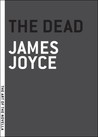
The DeadThe Dead by James Joyce
My rating: 5 of 5 stars

Although James Joyce's "The Dead" is a short story from the "Dubliners" collection, it was published as a separate book in the Penguin 60s series. Its 59 pages contain only 15,672 words, which is about 37 times fewer that Tolstoy's "War and Peace" and about 84 times fewer than Proust's "In Search of Lost Time". Still, because of its stunning psychological depth, this short story can properly be called a novella.

The story takes place at a New Year's party in Dublin over a period of few hours. Two elderly sisters are having their annual sing and dance party. Among various colorful characters attending the event is the protagonist, the sisters' nephew, Gabriel, who is accompanied by his wife, Gretta. He is the one to carve the goose and to make the main speech of the night. One of the songs reminds Gretta of a dramatic event from the past.

This is an impressive work of literary art, on many levels. First of all, it is absolutely amazing that the story is not dated at all. The collection was published in 1914, exactly 100 years ago, even before commercial radio was available. Despite all the mindboggling progress in technology, people have not changed. Some topics of conversations at a party held today may be different, although most would be similar to those that Mr. Joyce describes, and, of course, people today would be constantly checking Facebook or e-mail, yet their psychology, reactions, and moods remain the same as hundred years ago.

This is the first book that I have read that focuses on people's moods and here Joyce is a phenomenally skilled observer. Over the few hours, Gabriel's mood constantly changes, either subtly or in a dramatic way, and the intense feeling that the story is real, that the reader participates in the party, is palpable.

While many authors are able to capture sharp psychological observations, very few are so masterful in their writing. The novella is a tour de force of short prose, and the last two pages take your breath away.

I loved Joyce's "A Portrait of the Artist as a Young Man". I read many fragments of "Ulisses" and was very impressed. This novella provides a strong argument for my pet thesis that books should, in general, be shorter. Joyce shows that one can construct a lively, complex, wise, and utterly believable depiction of human behavior on 59 pages.

Five stars.


View all my reviews

Wednesday, April 23, 2014

Age of IronAge of Iron by J.M. Coetzee
My rating: 5 of 5 stars

I have been torn while reading J.M. Coetzee's "Age of Iron" (it is the ninth book by this author that I have read) - my reactions oscillated from extreme awe to slight irritation. The novel contains so many passages of unparalleled wisdom, depth, and beauty, yet it is marred by a few instances of sermonizing preachiness.

Elizabeth Curren, a professor of classics in Cape Town, South Africa, is in the last stage of terminal cancer. She finds a homeless man, Mr. Vercueil, in the alley next to her garage. With her tacit approval, he kind of takes residence on her property. This is 1986, a dramatic time for South Africa, the time of burning townships and violent clashes between anti-apartheid fighters and the police aided by conservative activists. Mrs. Curren finds her domestic's son shot dead and a friend of his takes refuge in her house. Isolated from the harsh realities throughout her life, she discovers the true horrors of apartheid in her last weeks.

The novel, framed as a long letter to Mrs. Curren's daughter who escaped South Africa in 1976 and settled comfortably in the United States, has four central themes: the psychology of dying, the relationship between Mrs. Curren and the homeless man, the savagery caused by the apartheid system, and the juxtaposition of the wise reason of the old and the mindless fervor of the young.

The first two themes, the personal ones, are dealt with in an absolutely masterful way, typical for Mr. Coetzee. If the novel stopped there, I would need a six-star rating to give it justice. The two latter themes are different. The author vividly portrays the extreme drama of South Africa, yet I have some problems with the "paint-by-numbers" plot. The fourth theme, the young versus the old, emotion versus reason, feeling versus knowing, is largely conveyed through Mrs. Curren's monologues (since her conversation partner does not talk back), which makes the deep truths stated sound a little preachy. Still, Mrs. Curren is a classics professor, and speaking in perfectly complete paragraphs is what classics professors do best.

"Age of Iron" is an extremely dark book, even darker than Mr. Coetzee's other works. The heavy darkness is needed here, though. How else could one deal with impending death and with massive degradation of one's fellow human beings? Yet it is in no way a depressing novel. Mrs. Curren's involvement with anti-apartheid movement moves her thoughts away from the terrifying prospect of soon not existing any more. Helping others adds meaning to her ending life. Also, there is a beautifully captured fleeting moment of hope late in the novel and the last passages, despite death being near, are wonderfully uplifting.

Even with its weaknesses "Age of Iron" is a great book. The average of six stars for the first two themes and three-and-a-half stars for the latter two is

Four-and-three-quarter stars.


View all my reviews

Monday, April 14, 2014

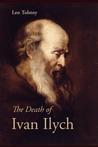
The Death of Ivan IlychThe Death of Ivan Ilych by Leo Tolstoy
My rating: 5 of 5 stars

Leo Tolstoy's novella "The Death of Ivan Ilyich" (1880s) is one of the most horrifying works of world fiction. It is a brutal, clinically precise, explicit book about the process of dying. I read it as a teenager and it shook me hard. Today, after almost 50 years, it has affected me even more, because I am now so much closer to the end. Tolstoy does a better job in describing the progression of Ivan Ilyich's mental states as the illness ravages his body than Ms. Kubler-Ross in her "On Death and Dying" (the "five-stage model of grief"). While we know that all other people die, Tolstoy shows his mastery in making the novella not about someone else's death but about me dying. And you.

The terror of dying has many facets. The first, obviously, is that with death we cease to exist. Today we are, and tomorrow we are not any more. It is perhaps the easiest aspect to bear. After all, we did not exist before our birth and somehow it was OK. All our plans, dreams, knowledge, feelings, and secrets are suddenly gone, but luckily we are not there to miss them.

Then, there is physical pain. Ivan Ilyich's illness causes him horrible pain. He screams for days on end, even on opium and morphine. But then not everybody draws the short straw; we can hope for an instantaneous death, through heart attack or being run over by a car.

Next, there is the deception. Ivan Ilyich, few weeks before his death, "saw clearly that all this was not the real thing but a dreadful deception that shut out both life and death". The doctors deceive him. His wife and children deceive him, pretending they believe he will be cured. His work colleagues pretend he is just sick and not dying.

But the most horrifying aspect of dying is how inconsequential our existence or non-existence is to other people, how irrelevant every one of us is in the big picture, and how replaceable we are. Ivan Ilyich has died, so we need to find someone else for our weekly bridge game that will proceed as if nothing has happened. While Ivan's wife talks to his friend, Pyotr Ivanovich, about her husband's agony and screams of pain, he thinks about the nasty spring in the sofa on which he sits.

Tolstoy is an extremely sharp observer of human psychology and behavior. Just one example: Ivan sees that "the awesome, terrifying act of his dying had been degraded by those about him to the level of a chance unpleasantness, a bit of unseemly behavior (they reacted to him as they would to a man who emitted a foul odor on entering a drawing room)".

This 19th century masterpiece is totally up-to-date in the 21st century. We are still in the business of dying.

Five stars.


View all my reviews