Tuesday, August 16, 2016

CosmosCosmos by Witold Gombrowicz
My rating: 5 of 5 stars

"A sparrow hanged on a piece of wire, a woman's deformed lip, and the whole cosmos of connections between them, produced by human mind."
(Lukasz Pruski's entry in the contest "Summarize Gombrowicz's 'Cosmos' In Fewer Than 140 Characters.")

The vagaries of memory: I do not remember much from my first trip back to the Old Country a scant twenty-five years ago yet I clearly remember surreptitiously reading Witold Gombrowicz's Bacacay under the desk during my high-school history class exactly fifty years ago. I had cherished that collection of short stories, probably because of some sexual content and absurdist aura. Years later I was a little disappointed by universally celebrated Ferdydurke and Trans-Atlantyk was a major turnoff for me. After a 35-year hiatus it is time to return to my compatriot's prose. I have chosen Cosmos (1965), a novel which I have never read before. And Gombrowicz delivers a near masterpiece!

Witold, the narrator, and his acquaintance, Fuks, two young men from Warsaw, are on vacations in Zakopane, the popular Polish resort in the Tatra Mountains. When walking around looking for a room to rent they find a sparrow hanged in a tree on a piece of wire. They stay at a pension run by a corpulent lady ("Roly-Poly" in the English translation), where the other residents are her husband, Leon, who uses a sort of private language characterized by preponderance of diminutives, their daughter, Lena, with her husband, and the housekeeper Katasia, whose lip is deformed after an accident.

In the main thread of the novel Witold and his companion are trying to explain the mystery of the hanged sparrow. They notice an indistinct mark on the ceiling which resembles an arrow. The arrow seems to point outside the house, where - guided by an unusual configuration of stones - they find a piece of stick hanging on a thread. Hanged sparrow, the position of stones, arrow-shaped marks, and hanged piece of stick all seem to indicate intentionality; there must be a purpose of all that, perhaps even a conspiracy. By whom, though? And the gallery of strange goings-on keeps growing.

Another main theme is the narrator's interest in Lena. Stimulated by the brief glimpse of Lena's leg on a bed frame - this momentary yet powerful sighting stays with him for weeks - Witold creates an erotic image of the young woman, a mind construct that tends to conflict with Lena's actual physical being and her married status. What's more, Lena's mouth and Katasia's deformed lips seem to merge into one fascinating yet menacing image in the narrator's hyperactive mind.

The last part of the novel is an unforgettable account of a mountain excursion. Leon suggests taking the trip to show the company a secret point in the Kościeliska Valley, from where the view of the mountains is incomparably magnificent. All characters - the party also includes two newly married couples - embark on the trip in horse-driven carriages. The excursion culminates in Leon's amazing confession, and then only one major event remains in the plot.

Some loose and amateurish thoughts on the main motifs in the novella: Mr. Gombrowicz convincingly shows the enormously rich texture of everything that contributes to a single moment of human life: the totality, the cosmos of sensations experienced at each instance of time:
"Everything is equally important, everything that constitutes the current moment, a kind of consonance, the humming of a swarm." (My own translation)
Each thing, each feeling, each moment has its own universe of meanings and possible connections to all other things, feelings, and moments. The author offers an intricate psychological analysis of micro-behaviors, snippets of thoughts, sensations, and moods.

Another theme is quite awkward to describe (especially when the reviewer lacks literary talent). Consider the following quote:
"When she smells herself, it does not bother her" (my own translation)
Witold is acutely aware of the grossness of a person's physicality if that person is not him. The "physical I", the personal details of one's physical self, such as feeling one's teeth with the tongue, become alien and unpleasant when they are someone else's. On the other hand, the often repeated phrase "one's own to one's own for one's own" (again, my own translation) likely has some masturbatory connotations, but enough of amateur psychology.

Cosmos is open to a wide range of interpretations the reader may want to ascribe to it: the most obvious and simplistic one is that the author wants to highlight the human tendency to look for patterns and causation in completely random events. The novel may also be considered a classy suspense story. Or a sophisticated joke. In my view the most significant is the psychological analysis and what pushes this "borderline literary masterpiece" to the five-star territory is that the author examines the most private, secret, embarrassing layers of human psyche – the layers whose existence we are not often eager to acknowledge. Mr. Gombrowicz is at the top of his craft as an investigator of human psychology.

I do not particularly like the ending; not because I care whether it "explains" things or not; a literary work of art is obviously not required to explain anything; it is just required to dazzle the reader. Although the rather shocking ending cleverly ties the two main motifs, mouth and hanging, it also seems to trivialize the whole extraordinary setup.

I have read the novel twice, first the Polish original and then the English translation by Danuta Borchardt. I am impressed by the translator's skill: Gombrowicz's prose, especially Leon's private language, is virtually impossible to translate. Yet it is still obvious to me that the original reads much better and seems to exhibit way more depth while the English version feels somehow incomplete and superficial. (I tried a similar experiment two months ago when I read Gabriel Garcia Marquez' Chronicle of a Death Foretold in two different translations, English and Polish. In that case the English version of the Spanish original seemed better than the Polish one.)

Finally, the last sentence of the novel is certainly one of the best last sentences I have ever read. Fantastic!

Four and a half stars, rounded up.


View all my reviews

Sunday, June 19, 2016

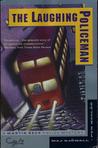
The Laughing Policeman (Martin Beck, #4)The Laughing Policeman by Maj Sjöwall
My rating: 5 of 5 stars

"The cold bright light made every detail stand out with the sharpness of an etching. The whole bus seemed to be full of twisted, lifeless bodies covered with blood."

My main problem in reviewing The Laughing Policeman (1968), the fourth entry in the famous "Martin Beck series" of police procedurals by Maj Sjöwall and Per Wahlöö, is how to convincingly justify rounding my four-and-a-half-star rating to five stars. Obviously, as a novel, as a work of literary fiction, this crime drama is nowhere near the greatness of, say, J.M. Coetzee's Disgrace or C. Nooteboom's The Following Story . While the prose is good and the plot is absolutely captivating, while there are virtually no clichés that tend to ruin most mystery novels, and while the characters are full-bodied and vividly drawn, the book - quite obviously - is not a masterpiece of literature. So why five stars? It is simply the best police procedural I have ever read, a pinnacle of its genre. I read it for the first time forty-something years ago, and the current re-read has not changed my enthusiastic opinion of the book. By the way, I am not alone in this high praise: the book won the Edgar Award for the best novel of 1970 from the Mystery Writers of America.

Stockholm, Sweden. November 1967. Most of the police force are busy controlling the massive demonstrations: thousands of people are protesting the Vietnam War in front of the American Embassy. A man walking a dog runs towards a police patrol to report a city bus that has driven off the road and stopped with its front door open. In the bus the patrolmen find nine people shot, eight to their death - the greatest mass murder in Sweden's history. One of the victims is Ǻke Stenström, a detective from Martin Beck's homicide squad. Beck and his crew of Kollberg, Larsson, Melander, Rönn as well as detectives called from other Swedish regions embark on a long and painstaking investigation with virtually no clues available in the beginning.

The story follows the investigation, detailing every small step, each iota of progress and the many dead ends. No other crime novel is better at showing the team effort, the meticulously patient work that involves searching for clues, gathering and analyzing them, the various re-enactments and brainstorming sessions. Yet even with the most dedicated work of large teams of people, success would not be attained if not for individual sparks of intuition and brilliance, like Melander's crucial question "What could Stenström do?" or Kollberg's insights into and experience with sexual behaviors. Of course, nothing much would be achieved either without quiet, assured and steady-handed leadership by Martin Beck.

The portraits of detectives and other characters are superbly drawn and several passages are indeed masterpieces of psychological observation. I have always remembered the conversations between Kollberg and Asa Torell, Ǻke Stenström's girlfriend, and they indeed stand out as luminously as I had found them in the mid-1970s. There is not a single false note in the characters' psychology. The superbly convincing and powerful ending, devoid of any idiotic plot twists, stands out as the epitome of criminal story denouements.

Considering the bloody setup of the novel, it may seem strange but there is a substantial amount of humor in the novel. Not only do Kristiansson and Kvant provide the usual laughs, but we also have the monstrously stupid detective Ullholm, "a man who knew most things and understood everything." We also have some sexual humor: Kollberg asks his wife to stand on her hands, naked, and then receives a sort of vaccination from her. I like the generous dose of black humor: for instance, a psychiatrist in a mental hospital, while evaluating a man who murdered his wife, tells Kollberg that the patient is much better after he finally got what he needed: "to be rid of that bitch he was married to."

One of the most compelling passages in the novel is a fragment I have remembered for forty-something years: it quotes the text on a sign carried by a little girl during the anti-American demonstration - I am unable to repeat it because of decency concerns - and describes what the policemen later did to the little girl after they had seen the sign.

Four and a half stars, rounded up.


View all my reviews
Friday, March 18, 2016

The Foxes Come at NightThe Foxes Come at Night by Cees Nooteboom
My rating: 5 of 5 stars

"The dead, if neglected for too long, can affect you that way."

Another stunning book from Cees Nooteboom! During the 60 years of my adventure with books I have had various favorite writers: from Hugh Lofting and Jules Verne during childhood, through youthful fascinations with William Faulkner, through Fyodor Dostoyevsky, James Joyce, and Gabriel Garcia Marquez - to mention just a few literary giants towering over my middle age - to the recent obsession with J. M. Coetzee, whom I first read just over two years ago. But it is the extraordinary prose of my newest favorite author, Cees Nooteboom, that resonates the strongest with my literary sensitivities. I have never been so totally mesmerized by anyone's prose: not even by Joyce's unparalleled maturity and depth of insights about people, not by the spellbinding charm of Garcia Marquez' magical realism, and not even by the crystalline mathematical clarity of J.M. Coetzee's writing. Not only am I awed by Mr. Nooteboom's poetry of prose and his mastery of evocative moods, but also his favorite themes affect the deepest layers of my emotional self.

The central themes in Mr. Nooteboom's fiction are human impermanence, the fleeting nature of our existence, the questions of human identity and the essential role of memories in shaping who we are. His stories reveal the most horrifying truth about our ephemeral existence: the ordinary people die twice: first, the death takes them away from the realm of the living, and then, gradually, they turn into complete nothingness, when people who remember them die too. Soon they exist no more and it is precisely as if they have never existed at all. My grandmother still exists a little, because I remember her. Even my grandfather, whom I never met as he died over seventy years ago in the Mauthausen concentration camp, still exists a tiny bit, because she had told me about him. When I die, though, they will disappear forever.

The Foxes Come at Night (2009) is a collection of eight short stories, ostensibly connected through their setting at various points of the Mediterranean coast, but what really matters is that they are about memories of people whom we once knew and who are now gone. Any attempt of mine to summarize the stories would be ridiculous and would debase the beauty of the prose, so let me just say that although I love each one of the eight pieces, Paula and Paula II are absolutely unforgettable. The latter, a contemplation of our gradual passing from being to nothing, is likely the most stunning piece of writing I have ever been privileged to read. Loneliness is the fate of human life and most of us realize how lonely we will be at the moment of death, but we probably are not eager to imagine the utter loneliness when the memories of us vanish.

140 pages of a literary masterpiece. Wonderful translation from the Dutch by Ina Rilke needs to be acknowledged as well.

"My fingernail pressing in your hand that time, watching Antonioni. [...] Leave-taking. The last goodbye. You have opened your window. Gust of wind. That was me. Rustle, whisper. [...] All very fleeting. As we are. Gone."

Five stars.


View all my reviews

Sunday, December 6, 2015

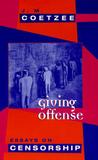
Giving Offense: Essays on CensorshipGiving Offense: Essays on Censorship by J.M. Coetzee
My rating: 5 of 5 stars

"The punitive gesture of censoring finds its origin in the reaction of being offended. The strength of being-offended, as a state of mind, lies in not doubting itself; its weakness lies in not being able to afford to doubt itself. "

J.M. Coetzee's Giving Offense (1996) is a collection of 12 essays about the nature and essence of censorship, its various aspects and manifestations, and its effects on the society and on the artists (the subtitle of the book says it simply: Essays on Censorship). While a profound and highly scholarly work, meticulously researched and referenced on over 50 pages, this set of philosophical and literary criticism analyses is not at all impenetrable thanks to Mr. Coetzee's unsurpassed lucidity of writing. The depth and elegance of the author's analyses are so much above my ability to explain them that I am embarrassed writing this review, feeling like an elementary school kid tasked with annotating Finnegans Wake. I will thus limit my highly unqualified comments to a few selected essays, although each of the 12 fascinating studies deserves detailed analyses by scholarly-inclined readers.

Chapter Four, entitled "The Harms of Pornography: Catharine MacKinnon", is a devastatingly sharp critical analysis of Ms. MacKinnon's writings. Mr. Coetzee points out the parochialism and limitedness of some of her central ideas, as evidenced by her sole focus on the Western world, and her lack of interest in the widespread objectification and denigration of women in the world of advertising. Coetzee is at his most forceful when he criticizes what I would call a severe intellectual fraud perpetrated by Ms. MacKinnon who relativizes truth to gender and interprets female sexuality as a "construction of male power".

Allow me a personal aside here: Coetzee's writing resonates with me so strongly because he observes the social phenomena not from the perspective of what is "right" and what is "wrong" (which, of course, depends on who defines the rightness or wrongness and when and where the definition is constructed), but purely from the perspective of logic - through examining whether the arguments are valid. Coetzee's reasoning is so resoundingly refreshing because it goes strongly against today's prevalent mode of social discourse, driven by the so-called Political Correctness movement, the mode that eschews calm, logical analysis and instead focuses on attempting to right past wrongs, thus - incidentally - introducing new wrongs.

In Chapter Six, entitled "Osip Mandelstam and the Stalin Ode", the author offers an analysis of censorship and - more importantly - of self-censorship in 1930s, the darkest, Stalinist period of the Soviet history. In the next essay, "Censorship and Polemic: Solzhenitsyn", Mr. Coetzee, among many fascinating threads of analysis, mentions both proscriptive and prescriptive aspects of Soviet censorship and - most interestingly - describes "the dynamic of spiraling mimetic violence precipitated by a collapsing of distinctions", referring to a dialectic embrace between the enemies (Solzhenitsyn vs. the regime).

Out of the remaining chapters I would like to mention one on the Polish poet Zbigniew Herbert, which is a little outside the main thrust of the collection. While it indeed deals with issues of censorship, it focuses more on the universal and humanistic values of Mr. Herbert's poetry and on his use of allusiveness as a "mode of humanistic affirmation", and his recognition of irony as an ethical value. In Chapter Eleven which deals with relationship between the philosophy of apartheid and the system of censorship in South Africa, Mr. Coetzee - who is a mathematician by education - introduces the "algebra of mixing blood" - a sharply ironic device to illustrate the madness of apartheid philosophy.

Giving Offense is one of the most profound books I have ever read. It took me almost 20 hours to get through the 240 pages - the effort was totally worthwhile and I am happy that the onset of my senility has so far been slow enough to allow me the enjoyment of the read.

Four and three quarter stars.


View all my reviews

Friday, October 30, 2015

What's the Matter with Kansas? How Conservatives Won the Heart of AmericaWhat's the Matter with Kansas? How Conservatives Won the Heart of America by Thomas Frank
My rating: 5 of 5 stars

"Kansans just don't care about economic issues [...] Kansans have set their sights on grander things, like the purity of the nation. Good wages, fair play in farm country, the fate of the small town, even the one that we live in - all these are a distant second to evolution, which we will strike from the books, and public education, which we will undermine in a hundred inventive ways."

The main thrust of Thomas Frank's What's the matter with Kansas: How Conservatives Won the Heart of America, published in 2004, has not lost its relevance in 2015, particularly with the elections coming in the U.S. the next year. The author is trying to elucidate the phenomenon that seems beyond rational explanation: why have a large majority of people living in Kansas - the typical working class population who had solidly voted Democratic before 1980s - switched to supporting conservative Republicans? Why have they begun voting against their own economic interests? Why are there more supporters of conservative agenda among working class people than among those who profit from that agenda? Cutting taxes, reducing government, weakening regulations and customer protection - all these goals favor the rich and hurt the poor and the middle class by reducing or eliminating altogether the social safety net that covers the people who cannot afford to cover themselves. A conservative platform is always pro-business: business owners should be free to reduce salaries, cut and outsource jobs, reduce maternity benefits, avoid paying for medical care of their employees, etc. Why then do the poor people and the exploited people in Kansas vote en masse for the agenda that favors the rich and helps the economic exploiters?

Mr. Frank's answer is clear and convincing. The conservative Republican movement - unable to gain support of the working class on the economic issues - appropriated the religious and social agenda and captured the cultural anger of the working, "ordinary" people, the anger aimed at promotion of "disgusting counterculture", liberal judges, attempts to expand gun control, availability of abortion, liberal media, atheist scientists, immoral decadence, and the secular-humanist disease in general. Much of this anger comes as a backlash against the excesses of the "liberal Sixties", and anti-intellectualism is one of the main unifying themes of the conservative movement.

The leaders of the movement have managed to frame the political choices as the struggle between - on the one side - authentic, hard-working Americans, who enjoy hamburgers, cherish guns, and fervently pray to God, and - on the other - depraved, latte-guzzling, Volvo-driving, liberal, Eastern elite whose ideas are alien to the original values of the true Americans. The conservative leaders have understood that people's cultural, moral, and religious convictions drive their political choices.

The unspoken underlying motto of the conservative movement is to "socialize the risk and privatize the profits". The beauty of the monumental swindle performed by the right-wing ideologists is that the working class people - who will carry the burden of the business risks and will not participate in any of the profits - happily vote to ensure their own poverty and irrelevance, getting instead the feeling of superiority of their religious, moral, and cultural convictions.

In my view (here I need to disclaim that this paragraph is not about Mr. Frank's book) during 11 years since the book was published the situation has gotten worse: one reason is the further polarization of society caused by the universal access to Internet, which allows people to read only the news and articles with which they agree. Another reason for growing support of the conservative agenda are the obvious excesses of the liberal-backed political correctness movement, particularly in the area of diversity enforcement. Yet another new factor is the poor people's fierce resistance to the Affordable Care Act, the law that helps them get access to quality health care: in the authentic American way they prefer to not have any health care rather than to follow some socialist-flavored Canadian or European models.

What's the Matter with Kansas is a meticulously researched work (over 40 pages of notes and references) of unparalleled clarity and thoroughness. I have two critical comments: the author is passionately liberal, and his strong bias shows through his writing. His logically sound and factually correct argument and conclusions would be more effective if they were presented in a cold, unemotional style. My other gripe is that everything in the book is binary, black or white: people are either conservative or liberal. True, the polarization is increasing but there are still substantial numbers of people who agree with some tenets of each side - conservative and liberal - but disagree with some others. There are still some centrists out there.

One of the most thought-provoking books I have ever read.

Four and a half stars.


View all my reviews

Friday, October 9, 2015

Lost ParadiseLost Paradise by Cees Nooteboom
My rating: 5 of 5 stars

"Angels, it is said, are often unsure whether they pass among the living or the dead." (Rainer Maria Rilke)

When trying to characterize Cees Nooteboom's novel Lost Paradise (2005) in one word, "ethereal" immediately comes to mind. Synonyms of "ethereal" are many: "delicate, exquisite, dainty, elegant, graceful, fragile, airy, fine, subtle". Except for "fragile", all these adjectives fit the book perfectly. I would add three more adjectives to specify my perception of the book: "whimsical, enchanting, and magical". Now, what do the real critics - people who unlike me can write well in English - say about Lost Paradise? Their adjectives are "luminous, numinous, glorious, dreamy, self-conscious, daring, poetic, provocative, cleansing, brief, beautiful, mysterious, radiant, imaginative, dense, layered, magical, innovative, cool, sophisticated, ironic" (the last three are courtesy of J. M. Coetzee).

Even if one can say that Lost Paradise is about angels, the novel has an earthly plot, and not an insubstantial one at that. In a stunning Prologue, Mr. Nooteboom performs the best metafiction trick ever. Let's only say that suddenly - while being inside the story - we are outside of it and looking in. Highly virtuosic! Part One takes us to Australia where two young Brazilian women, girls really, fascinated with the indigenous people's culture, visit the sacred Aboriginal places. For one of the women, the narrator, this journey becomes a life-altering event, in spiritual, physical, and artistic dimensions. Towards the end of the story the women perform as angels in the Perth Angel Project (this is an event that really happened in 2000). Part Two is narrated by a middle-aged Dutch literary critic who travels to a rejuvenation clinic in Austria and is subject to sophisticated healing and anti-aging treatment. Eventually, the two stories merge - obviously angels must have helped.

While the synopsis may sound superficial, an incredible amount of weighty substance is packed into this slim volume (150 pages; Mr. Nooteboom obviously follows Italo Calvino's advice that "books ought to be short"): the dying of the Aboriginal culture, the serendipity of intersecting trajectories of human lives, the transforming power of art that lifts the human existence to transcend its earthly form, the celebration of life, the role of chance, loving as the essence of being, even the trauma of rape, and - perhaps most touchingly - the homage to the ancient humans, our ancestors from tens of thousands of years ago.

This being a Cees Nooteboom's work, it is beautifully written, and the translation from Dutch by Susan Massotty is superb as well. (After the rating I am quoting a dazzling passage.) And despite all the depth, this is a very readable book! The last scenes of the first part, the vividly portrayed happenings from the Perth festival, are unforgettable.

Cees Nooteboom has joined the list of my most favorite authors. After the ascetic and serious Rituals, metafictional In the Dutch Mountains, and unforgettably beautiful The Following Story, Lost Paradise is another exceptional work by the Dutch writer. One may be stunned by how different the books are - the supreme quality of prose is the only similarity between them - which to me is one of the marks of truly great writers and artists in general; they rarely if ever repeat themselves.

A few weeks ago I asked my wife - who knows much more about serious literature than I do - to read Nooteboom's The Following Story, which has recently become one of the very best books I have ever read. She liked it, but not as much as I did. "Impenetrable", she said, "Too enigmatic." Maybe. Well, if we put these three novels on a scale of impenetrability, then The Following Story would be somewhere in the middle, with Rituals at the enigmatic end, while in Lost Paradise all is in the plain view of the reader - thus yielding a very low score on the impenetrability scale. Perhaps only the references to Milton's Paradise Lost are a little obscure.

Finally, I should add that the readers who have seen Wim Wenders' magnificent movie about two invisible angels who roam over Berlin, Wings of Desire, will find some similarities in the overall mood. Perhaps one needs angels to reflect so sharply on the human condition.

Five stars.


"I would like to say something about my body, about how I have realised, more than ever, that it will be there only once, that it coincides with what I call 'me', but I reach a point where things can no longer be described in words. One cannot talk about ecstasy. And yet that is what I mean. I have never existed as much."


View all my reviews

Sunday, August 23, 2015

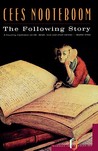
The Following StoryThe Following Story by Cees Nooteboom
My rating: 5 of 5 stars

"We will feel the draft blowing through the cracks in the structure of causality"

Is there such a thing as an impossibly beautiful book? Probably not, but Cees Nooteboom's "The Following Story" comes awfully close. So close that when I had finished reading the novella, I immediately read it again. It might not resonate with everybody, though: past a certain age, one subject tends to preoccupy one's mind, and Mr. Nooteboom writes, beautifully, about that subject. So while a younger reader will be likely to ask "What is that all about?", those of us who are almost there, will know.

This short novella has two distinct parts: In "One" Herman Mussert, a teacher of Latin and an author of cheap travel guides, tells us how having gone to sleep in Amsterdam, he wakes up in a room in Lisbon, the same room where he had made love to a woman many, many years ago. We do not know which "he" he is, though: the "he of then" or the "he of now"? The structure of causality is drafty indeed. What is "now", by the way? Where is it where it is not here any more? And what is "I"? Am I the same I as 20 years ago?

In the dreamlike and hypnotic "Two" Mr. Mussert is on a ship traveling across the ocean, into the mouth of the Amazon river, close to the city of Belém on the Brazilian coast, and then up and up the river, past Manaus and the Rio Negro junction, surrounded by the nocturnal jungle. The ship passengers take turns to tell stories of their lives and then they quietly disappear, one by one, never to be seen again. Mr. Mussert is waiting for his turn.

The two parts, so remarkably different, need each other: the second would not make its tremendous impact without the first; the first without the second would just be a philosophical discourse on causality and passage of time. What makes this book so powerful is that its ostensibly main theme - our impermanence - is not the dominating one; "The Following Story" is also about love in its multitude of forms: love for beauty, as in poetry of Ovid, love for a student who shares the teacher's zeal in the quest for truth and knowledge, love for Socrates' courage of convictions, and - of course - Mr. Mussert's love for Mrs. Zeinstra.

The translation is extraordinary; I do not believe the prose of the original could be any more luminous and delightful. The one problem with "The Following Story" is that after reading it most other books will seem like empty tales "told by an idiot, full of sound and fury, signifying nothing."

Five stars.


View all my reviews